
20 Money Saving Habits
Are you tired of reaching the end of the month with nothing left in your bank account? You’re not alone. Millions of people live paycheck to paycheck — not because they don’t earn enough, but because small, unnoticed spending habits quietly drain their finances.
The good news? You don’t need a finance degree or a six-figure salary to save money. You just need the right habits — repeated consistently over time.
In this guide, you’ll discover 20 practical, actionable money-saving habits that are proven to work. Each one is something you can realistically start this week, no matter your income level or financial background.
Let’s get into it.
Why Money Saving Habits Matter More Than One-Time Fixes
Most people think saving money is about making one big change — cutting a subscription, finding a higher-paying job, or getting a windfall. But the truth is, wealth is built through small, consistent actions done daily.
Think of it this way: saving ₹100 a day adds up to ₹36,500 in a year. That’s the power of habits over willpower.
The habits below are designed to be simple, sustainable, and genuinely impactful — not the “skip your morning coffee” advice that sounds good but rarely moves the needle.
1. Track Every Rupee You Spend (For at Least 30 Days)
Why it works: You cannot manage what you don’t measure. Most people who track their spending are genuinely shocked to discover where their money actually goes.
How to do it: Use a free app like Walnut, Money Manager, or even a simple Google Sheets spreadsheet. For 30 days, log every single purchase — groceries, auto-rickshaw fare, chai, everything.
At the end of the month, categorize your spending. You’ll almost certainly find at least 2–3 categories where you’re overspending without realizing it.
Pro tip: Don’t judge yourself while tracking — just observe. The goal is data, not guilt.
2. Follow the 50/30/20 Budget Rule
Why it works: A budget gives your money a plan before you spend it. The 50/30/20 rule is one of the simplest and most effective frameworks for personal finance.
How it works:
- 50% of your income goes to needs (rent, food, utilities, transport)
- 30% goes to wants (eating out, entertainment, hobbies)
- 20% goes to savings and debt repayment
How to start: After your next payday, divide your income into these three buckets before spending anything. Even if you can’t hit 20% savings right away, aiming for 10% is a strong start.
3. Automate Your Savings on Payday
Why it works: When savings are automatic, you never get the chance to spend that money. This is called “paying yourself first” — and it’s one of the most powerful financial habits you can build.
How to do it: Set up an automatic transfer to a separate savings account the day your salary arrives. Even ₹500 to ₹1,000 per month adds up significantly over time when earning interest.
Most Indian banks allow you to set up standing instructions for free. Use it.
4. Unsubscribe From Emails That Tempt You to Spend
Why it works: Retail email marketing is specifically designed to make you want things you didn’t know you needed five minutes ago. Removing the temptation is far easier than resisting it every time.
How to do it: Go through your inbox and unsubscribe from every promotional email — fashion brands, food delivery apps, online stores, flash sale alerts. Use a free tool like Unroll.me to do this in bulk.
You’ll spend less impulsively without feeling deprived, because you simply won’t know about most sales.
5. Use the 24-Hour Rule Before Any Non-Essential Purchase
Why it works: Impulse buying is one of the biggest budget killers. The 24-hour rule creates a cooling-off period that lets emotion settle and logic take over.
How to do it: Whenever you want to buy something that isn’t essential — clothes, a gadget, a takeaway meal that costs more than usual — wait 24 hours. If you still want it the next day and it fits your budget, go ahead. Most of the time, the urge passes.
For bigger purchases (over ₹5,000), extend the rule to 72 hours or even a week.
6. Meal Plan and Cook at Home More Often
Why it works: Food is one of the largest and most controllable expenses in most household budgets. Eating out regularly can cost 3–5 times more than cooking at home.
How to start:
- Spend 15–20 minutes on Sunday planning your meals for the week
- Make a shopping list based on that plan and stick to it
- Batch-cook staples like dal, rice, and sabzi in larger quantities to save time
Even replacing 3–4 meals out per week with home-cooked food can save ₹2,000–₹5,000 per month for a family.
7. Avoid Grocery Shopping When Hungry
Why it works: Studies consistently show that people buy more — and more impulsively — when they shop on an empty stomach. Your brain treats food as urgent when you’re hungry, even food you don’t need.
How to do it: Always eat before going to the grocery store or ordering groceries online. Shop from a list and avoid browsing aisles you don’t need.
This one small habit can reduce your grocery bill by 10–20% with zero effort.
8. Negotiate Bills and Recurring Expenses
Why it works: Most people assume their bills are fixed. They aren’t. Mobile plans, internet packages, insurance premiums, and even rent are often negotiable — especially if you’ve been a loyal customer.
How to do it:
- Call your mobile provider and ask if there’s a better plan available
- Contact your insurance company before renewal and ask about discounts
- Research competitor pricing and use it as leverage
- If you’re renting, try negotiating a longer lease in exchange for a lower monthly rate
Many people are surprised to find they can save ₹500–₹2,000 per month just by making a few phone calls.
9. Use Cash or UPI Limits for Discretionary Spending
Why it works: Spending digital money feels less “real” than spending physical cash. When you see notes leaving your hand, you naturally become more mindful of what you’re buying.
How to do it: Set a weekly cash budget for discretionary spending (eating out, shopping, entertainment). Once it’s gone, it’s gone. Alternatively, set a UPI/credit card spending limit through your banking app so you get alerts when approaching your budget.
10. Build an Emergency Fund Before Anything Else
Why it works: Without an emergency fund, any unexpected expense — a medical bill, car repair, job loss — goes straight onto a credit card or loan. This creates debt that can take months or years to pay off, costing you far more than the original expense.
The goal: Save 3–6 months of living expenses in an easily accessible account.
How to start: If that sounds overwhelming, start with a mini-emergency fund of ₹10,000–₹25,000. Once that’s in place, keep building. Every month, contribute something — even ₹500 — until you reach your target.
11. Cancel Subscriptions You’ve Forgotten About

Why it works: Subscription services are designed to be easy to forget. Small monthly charges — ₹199 here, ₹499 there — accumulate silently in the background and often aren’t noticed until you actually look.
How to do it: Pull up your bank or credit card statement from the past 3 months and highlight every recurring charge. Ask yourself: “Have I used this in the last 30 days? Is it worth the cost?” Cancel anything you haven’t actively used.
Common forgotten subscriptions include streaming services, cloud storage, fitness apps, and news platforms.
12. Buy Generic or Store Brands for Everyday Items
Why it works: For most everyday products — cleaning supplies, staple groceries, medicines, toiletries — the generic version is virtually identical in quality to the branded version. You’re often paying a premium just for the packaging and marketing.
How to start: Next time you’re shopping, compare the ingredients or composition of a branded product with the store brand. In most cases, they’re the same. Switch for items where brand doesn’t matter to you, and keep branded products only where quality genuinely makes a difference.
Potential savings: 20–40% on your grocery and household supply bill.
13. Learn to DIY Before Paying for Services
Why it works: Many services that people outsource — basic home repairs, haircuts, car washing, tailoring small tears, even basic tax filing — can be done yourself with a YouTube tutorial and 30–60 minutes.
How to apply it: Before calling a professional or ordering a service, spend 10 minutes searching “how to [task] yourself.” You won’t always do it yourself, but you’ll save money when you do — and you’ll learn a useful skill.
Start small: wash your own car, iron your own clothes, fix a leaky tap, sew a button.
14. Plan Big Purchases Around Sales Seasons
Why it works: Major purchases made impulsively at full price can cost 30–50% more than the same item bought during a planned sale. In India, the biggest discount seasons include Diwali, end-of-season sales, Republic Day, and Independence Day.
How to do it: Keep a “wish list” of things you genuinely need or want to buy. When a sale season approaches, check if any of those items are discounted. Buy them then — not when the urge strikes.
This approach requires patience but can save thousands of rupees on electronics, appliances, clothing, and more.
15. Reduce Electricity and Utility Bills With Small Changes
Why it works: Utility bills are a fixed expense most people never try to reduce. But small behaviour changes can cut your electricity bill by 15–30% without any major investment.
Practical steps:
- Switch off lights, fans, and ACs when leaving a room
- Use energy-saving LED bulbs throughout your home
- Run the washing machine and dishwasher only with full loads
- Unplug chargers and appliances when not in use (standby power consumption is real)
- Use a ceiling fan before reaching for the AC — it’s a fraction of the cost
Over a year, these habits can save ₹3,000–₹10,000+ depending on your household size.
16. Use Public Transport or Carpooling When Possible
Why it works: Personal vehicle expenses — fuel, maintenance, parking, insurance — are among the highest costs for urban households. Reducing how often you use your own vehicle adds up quickly.
How to apply it: For regular commutes or predictable routes, use the metro, bus, or carpool with a colleague. Even replacing your personal vehicle 2–3 days a week with public transport can save ₹1,500–₹4,000 per month in fuel alone.
This also reduces vehicle wear, lowering long-term maintenance costs.
17. Use Credit Cards Wisely — or Avoid Them
Why it works: Credit cards are double-edged. Used well, they give you cashback, reward points, and purchase protection. Used poorly, they trap you in high-interest debt that can compound quickly.
The rules for smart credit card use:
- Never spend more than you can pay off in full each month
- Always pay the full balance — not just the minimum — to avoid interest charges
- Use one card for essential spending to accumulate rewards
- If you tend to overspend on credit, switch back to debit only
Credit card interest rates in India typically range from 36–48% per annum. Carrying even a small balance month to month is extremely costly.
18. Invest Your Savings, Don’t Just Store Them
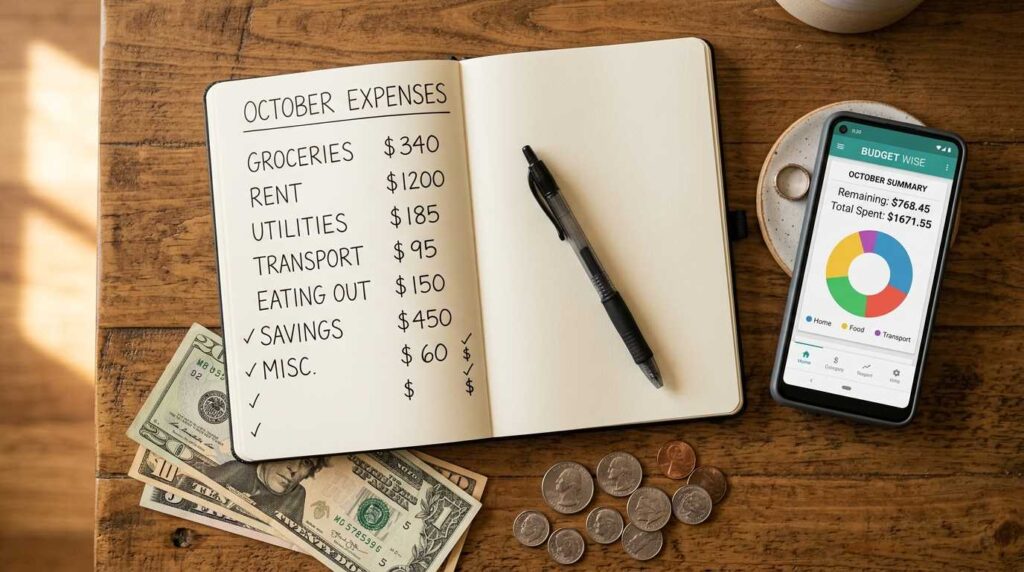
Why it works: Money sitting in a savings account earns minimal interest — often less than the inflation rate, meaning your money is actually losing purchasing power over time. To build real wealth, your savings need to work for you.
Where to start:
- SIP (Systematic Investment Plan): Start a SIP in an index fund or mutual fund with as little as ₹500/month. Platforms like Groww, Zerodha, or Paytm Money make this simple
- PPF (Public Provident Fund): Risk-free, tax-saving, and backed by the government
- RD (Recurring Deposit): Predictable returns and a good habit-builder for new savers
You don’t need to understand the stock market to start. A basic index fund SIP is a solid, low-maintenance starting point for most people.
19. Review Your Finances Once a Month
Why it works: Your finances don’t manage themselves. A regular monthly review keeps you on track, lets you catch problems early, and helps you celebrate progress — which keeps you motivated.
How to do a simple monthly review:
- Check your spending against your budget — where did you overspend?
- Review your savings balance — did you hit your target?
- Check your investments — any action needed?
- Set one financial goal or adjustment for the coming month
This doesn’t need to take more than 30–45 minutes. Put it in your calendar like any other appointment.
20. Educate Yourself About Personal Finance Continuously
Why it works: Financial literacy is one of the highest-return investments you can make. The more you understand about money — how it works, how to make it grow, how to avoid costly mistakes — the better your long-term financial outcomes will be.
Free ways to learn:
- Books: The Psychology of Money by Morgan Housel, Rich Dad Poor Dad by Robert Kiyosaki, Let’s Talk Money by Monika Halan (written specifically for Indian readers)
- YouTube channels: Pranjal Kamra, Akshat Shrivastava, CA Rachana Ranade for India-specific personal finance
- Podcasts: Paisa Vaisa, The Money Show
- Apps: ETMONEY, Groww blogs, and Zerodha Varsity for investing basics
Spending even 30 minutes a week learning about money will pay dividends for the rest of your life.
How to Build These Habits Without Feeling Overwhelmed
Reading 20 habits at once can feel like a lot. Here’s the key: don’t try to start all 20 at once.
Instead, follow this simple approach:
Week 1: Pick 2 habits from this list that feel the easiest or most relevant to your situation. Focus only on those.
Month 1: Once those feel natural, add 2 more.
By Month 6: You’ll have integrated 10–12 habits naturally, and the savings will be compounding.
The goal is progress, not perfection. Even implementing 5 of these 20 habits consistently will meaningfully change your financial life over a year.
Quick Summary: 20 Money Saving Habits at a Glance
| # | Habit | Estimated Monthly Savings |
|---|---|---|
| 1 | Track your spending | Varies (awareness) |
| 2 | Follow the 50/30/20 rule | Varies (structure) |
| 3 | Automate savings on payday | ₹500–₹5,000+ |
| 4 | Unsubscribe from sale emails | ₹500–₹2,000 |
| 5 | Use the 24-hour rule | ₹500–₹3,000 |
| 6 | Meal plan and cook at home | ₹2,000–₹5,000 |
| 7 | Don’t shop when hungry | ₹200–₹800 |
| 8 | Negotiate recurring bills | ₹500–₹2,000 |
| 9 | Use cash/UPI limits | ₹500–₹2,000 |
| 10 | Build an emergency fund | Prevents debt |
| 11 | Cancel forgotten subscriptions | ₹300–₹2,000 |
| 12 | Buy generic brands | ₹500–₹1,500 |
| 13 | DIY before paying for services | ₹200–₹1,000 |
| 14 | Plan purchases around sales | ₹1,000–₹5,000 |
| 15 | Reduce utility bills | ₹300–₹1,000 |
| 16 | Use public transport | ₹1,500–₹4,000 |
| 17 | Use credit cards wisely | Prevents interest charges |
| 18 | Invest your savings | Long-term wealth building |
| 19 | Monthly financial review | Keeps goals on track |
| 20 | Continuously learn about finance | Lifelong financial improvement |
Final Thoughts
Saving money isn’t about deprivation — it’s about being intentional. Every rupee you save today is a choice you’re making for your future self. The habits above aren’t about cutting out joy; they’re about making sure your spending reflects what actually matters to you.
Start small. Start today. Even one habit from this list, applied consistently, can change your financial trajectory over time.
Which habit are you going to start with? Share it in the comments — and come back in 30 days to let us know how it went.
Found this helpful? Share it with a friend who’s trying to save more money — it might be exactly what they needed to read today.